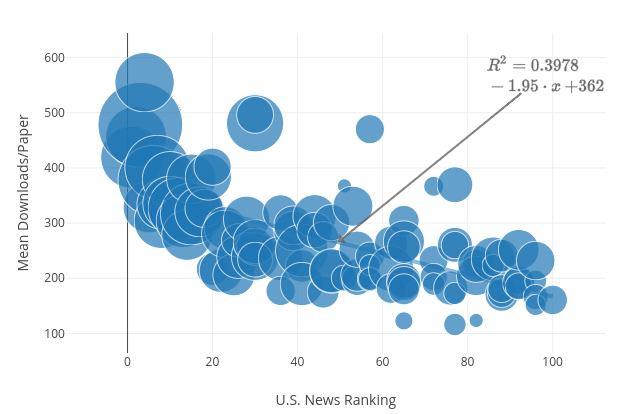
There are hundreds of thousands of papers “published” in LSN e-journals. These papers have the potential to provide a great deal of insight into the production and consumption of legal academic research. I’ve been interested in this data for a while, but it wasn’t until this weekend that I finally found some time to dig… Continue reading Legal Scholarship Network Research Production & Consumption
Blog
Law School Lateral Hiring
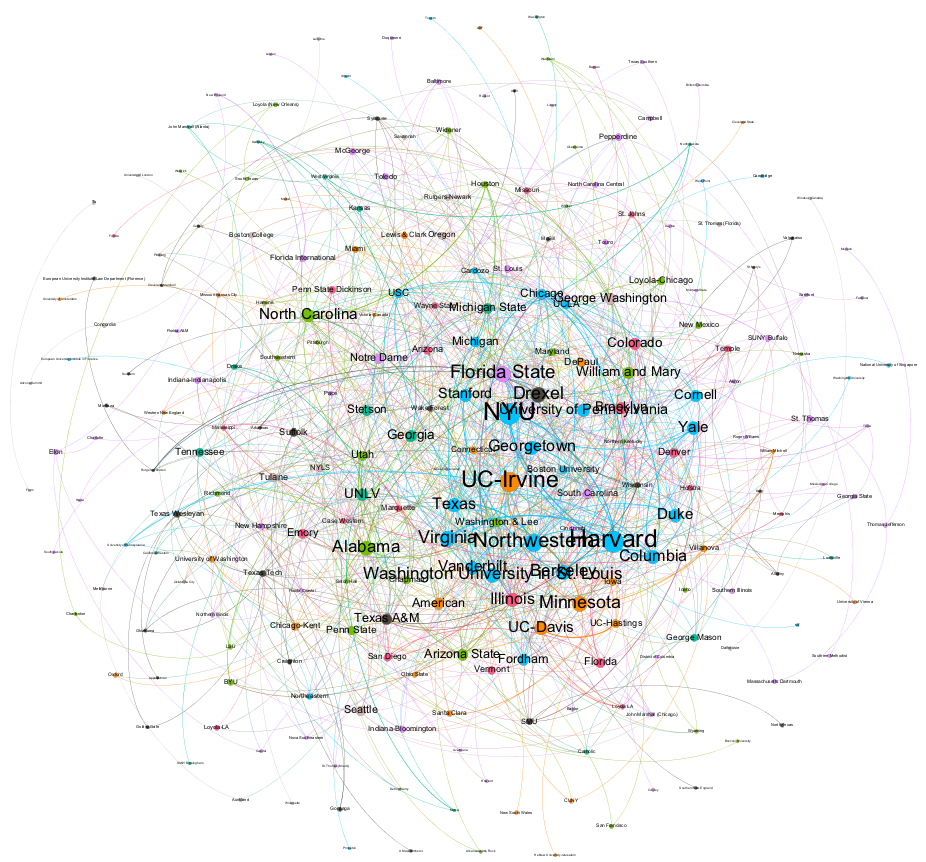
I was recently asked about lateral hiring at American law schools. I pointed the questioner to lists of lateral hires available both at Brian Leiter’s blog, and those made by Dan Filler at ConcurringOpinions, and TheFacultyLounge. These are very useful sources of information, but a bunch of annual lists can be hard to make sense of.… Continue reading Law School Lateral Hiring
The #CongreSSH2016 twitter-sphere
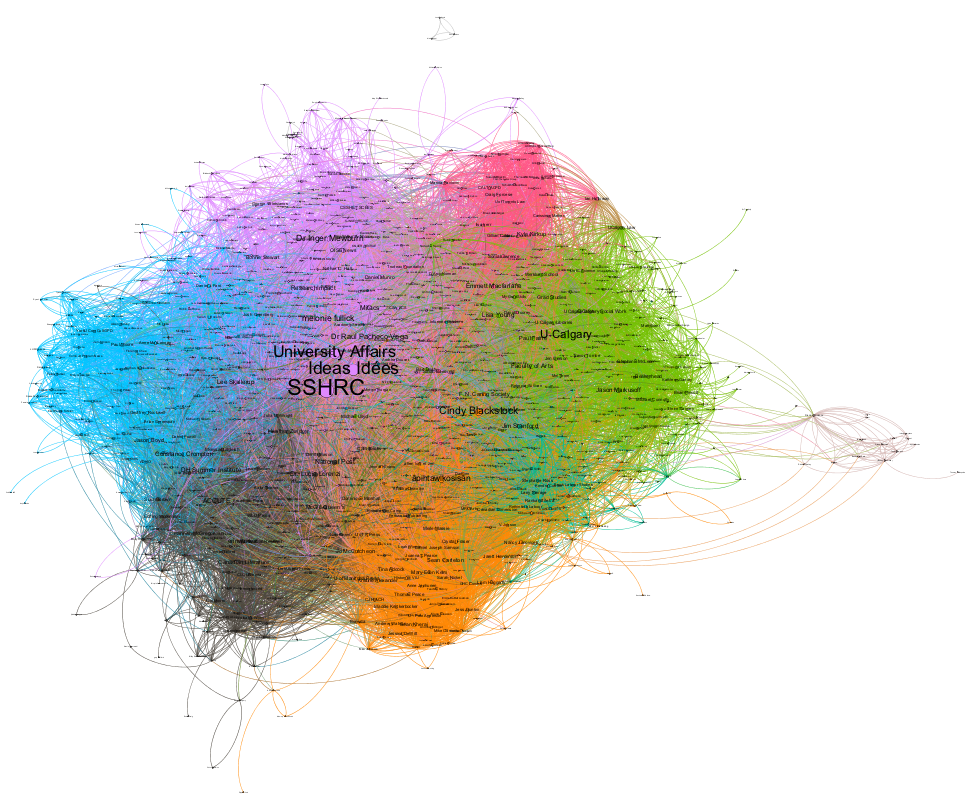
I’m currently at the airport, waiting to board my flight back from the Congress of the Humanities and Social Sciences in Calgary. Congress is a sort of super-conference where over 70 scholarly associations simultaneously hold their annual conventions. For those who aren’t Canadian academics, the concept might seem a bit foreign, but it works well in practice.… Continue reading The #CongreSSH2016 twitter-sphere
Judicial Gobbledygook.
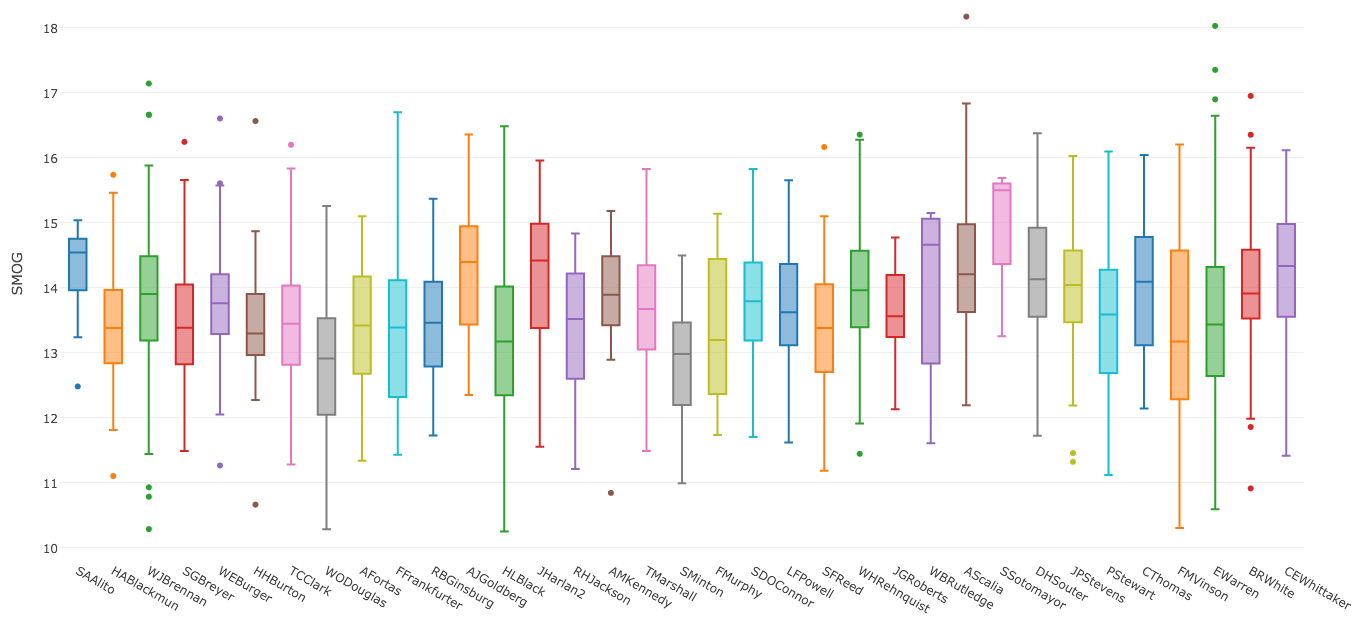
I published a short essay in the Yale Law Journal forum recently: http://www.yalelawjournal.org/pdf/Whalen_PDF_5spbaaeu.pdf. I thought I’d slightly supplement the content available there by posting the interactive charts here: Here’s an overall plot of mean SMOG since 1946: A plot of the mean intra-judge z-score by years of tenure: Each judge’s yearly intra-judge SMOG… Continue reading Judicial Gobbledygook.
The Supreme Court Advocacy Network
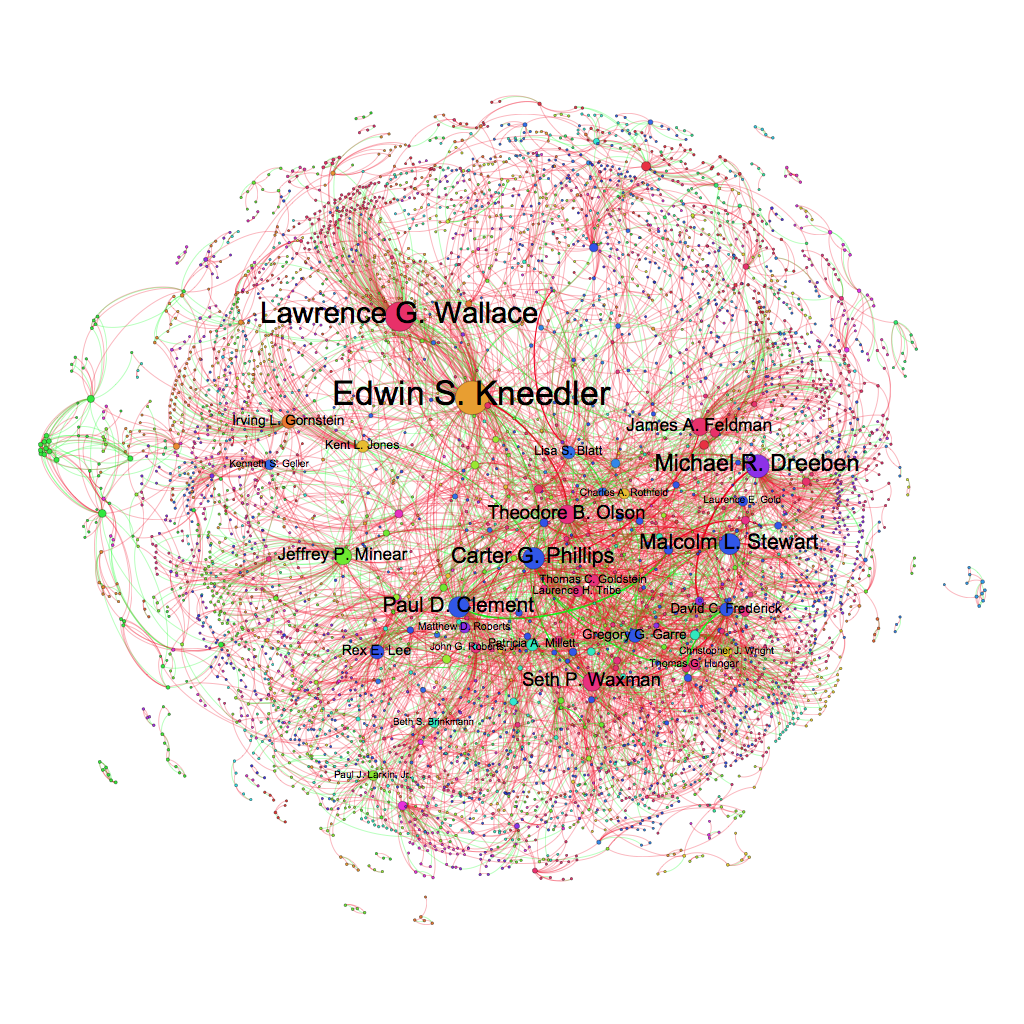
This is the third (and likely last for a while) in a series of legal network posts. The first explored legal academic co-authoring relationships. The second mapped the law prof twitter network. Below you’ll find a network representing the advocacy relationships between lawyers who have argued cases at the Supreme Court. For some years now,… Continue reading The Supreme Court Advocacy Network
The Law Prof Twitter Network 2.0

This post has been updated from the previous one located here. I left the previous post up so that anyone interested in changes over time can see the previous results. There are about 50 more profs in the network now. Interestingly, in just the past few days the structure of the law prof twitter network has… Continue reading The Law Prof Twitter Network 2.0
The Law Prof Twitter Network
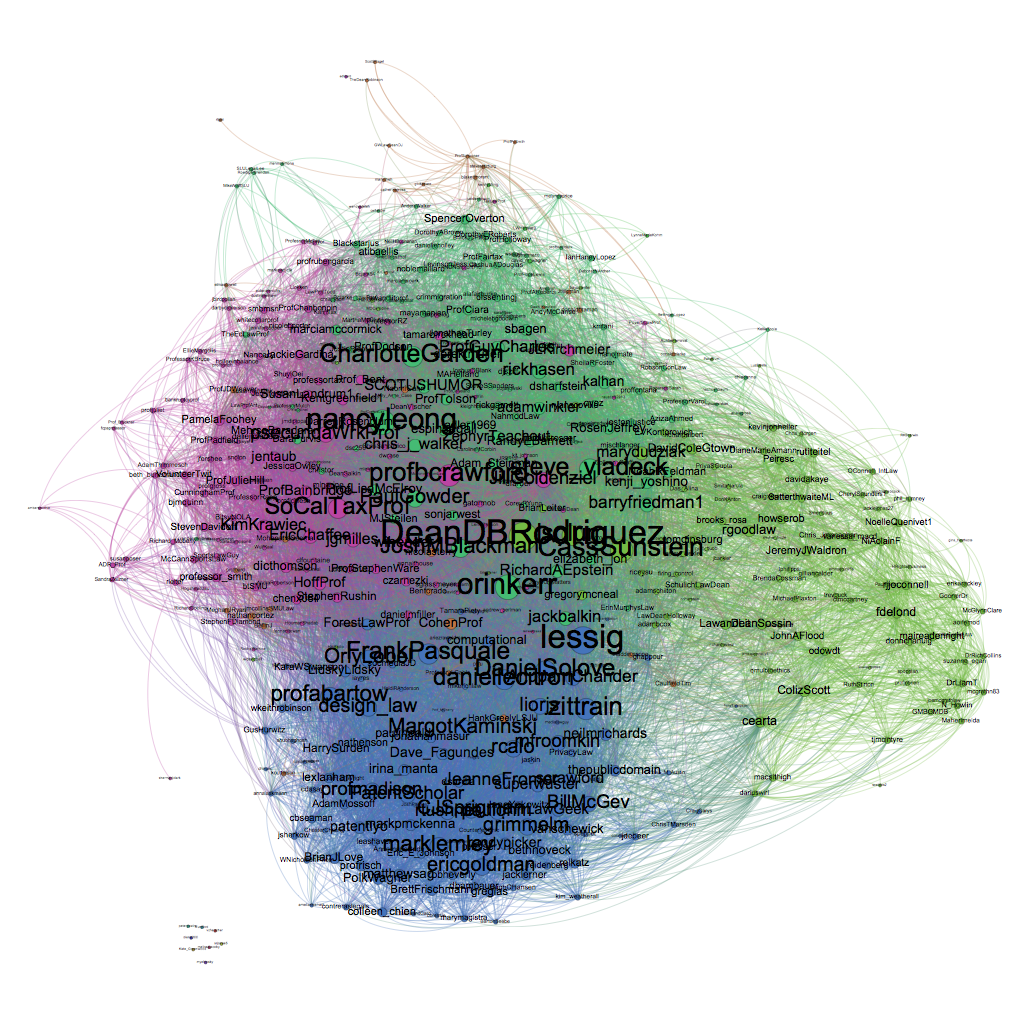
Following recent discussions about the importance of blogging/tweeting to contemporary academia (see: LSE via TaxProf), and Bridget Crawford’s Law Prof Twitter Census (version 3.0) over at TheFacultyLounge, I thought I’d do some number crunching and network building. I wrote a short script to read all of the law prof twitter handles included in the census and… Continue reading The Law Prof Twitter Network
Top coauthors in legal academia.

The role that collaboration plays in creativity and the production of knowledge is an major focus of my recent research. As such, I’m generally interested in patterns of collaboration. Having mostly wrapped up the fall submission season and participated in selecting the last articles that I will help select for the Northwestern University Law Review, I found myself wondering about patterns… Continue reading Top coauthors in legal academia.
Appellate brief length, sentiment, and subjectivity as predictors of case outcome
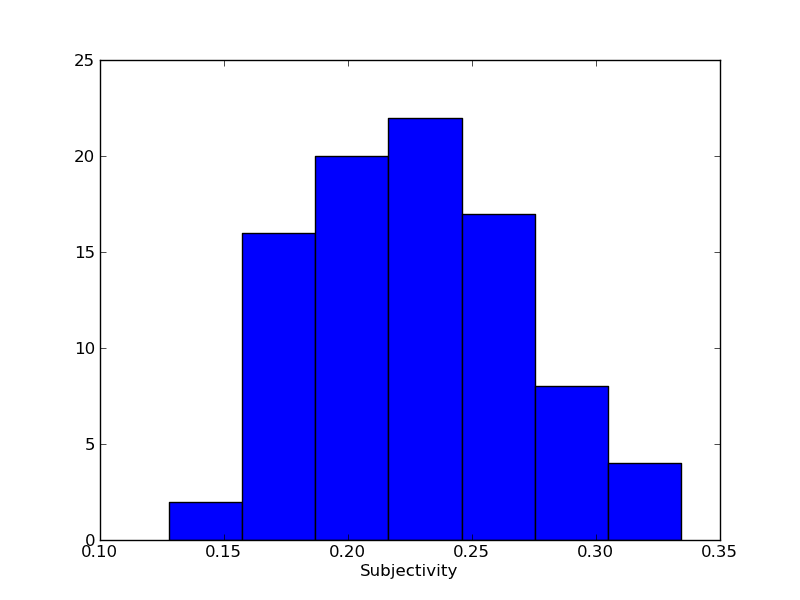
I recently did a quick language analysis of appellate case briefs to determine whether there were linguistic traits of the briefs that could be used to predict the case outcome. I collected about 100 briefs, from cases where Westlaw had both appellee and appellant briefs. Briefs were then coded by procedural posture,… Continue reading Appellate brief length, sentiment, and subjectivity as predictors of case outcome
The relationship between research output and teaching quality
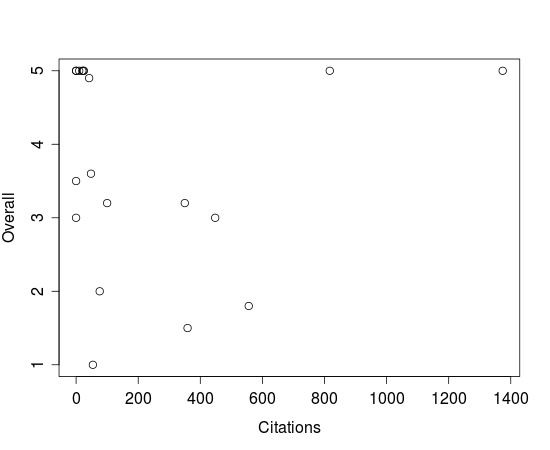
This post was inspired by the discussion about the value of research in legal academia at Workplace Prof Blog. In the comment section of the linked post you’ll see that on the one side of the issue we have individuals like Mitchell Rubenstein arguing that “teaching is only of secondary importance” to today’s legal professoriate.… Continue reading The relationship between research output and teaching quality