This year’s law prof twitter census results were recently published over on TheFacultyLounge. At the risk of being pilloried by law profs on twitter, I’ve again chosen to map out the prof following network and tabulate some rankings. As always, caveats abound (see below). The Network There was an impressive growth in the number of… Continue reading 2022 Law Prof Twittersphere
Blog
The Law Prof Twittersphere 2020
This year’s law prof twitter census results were published back in September. After some delay—due in part to my international move during a global pandemic, in other part to my having actual work to do, and in remainder to 2020 being such a great year—I’ve gotten around to mapping the law prof network and subsequently… Continue reading The Law Prof Twittersphere 2020
The Law Prof Twittersphere 2019
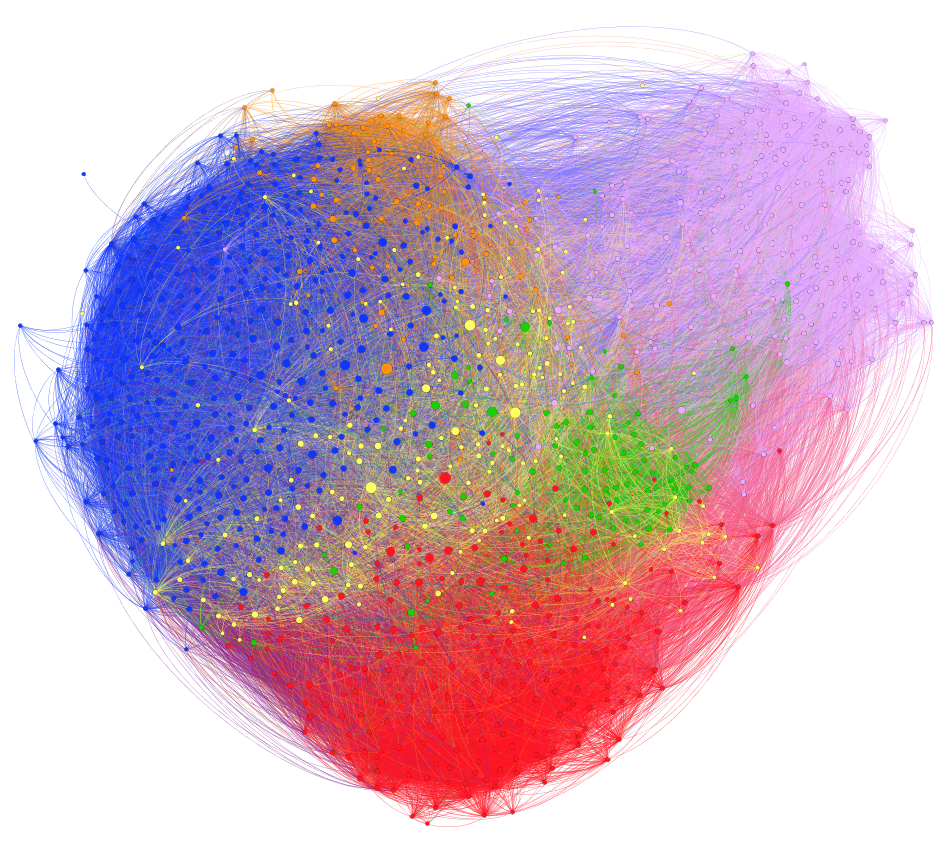
Following on the publication of this year’s Law Prof Twitter Census, I have re-run my law-prof-twitter-network-grabbing-script. There’s an updated network of law prof twitter following relations pictured below (click through for interactive version, it may take a moment to load and you may need to allow javascript to run). Once again, nodes are colored by… Continue reading The Law Prof Twittersphere 2019
LSA Twittersphere
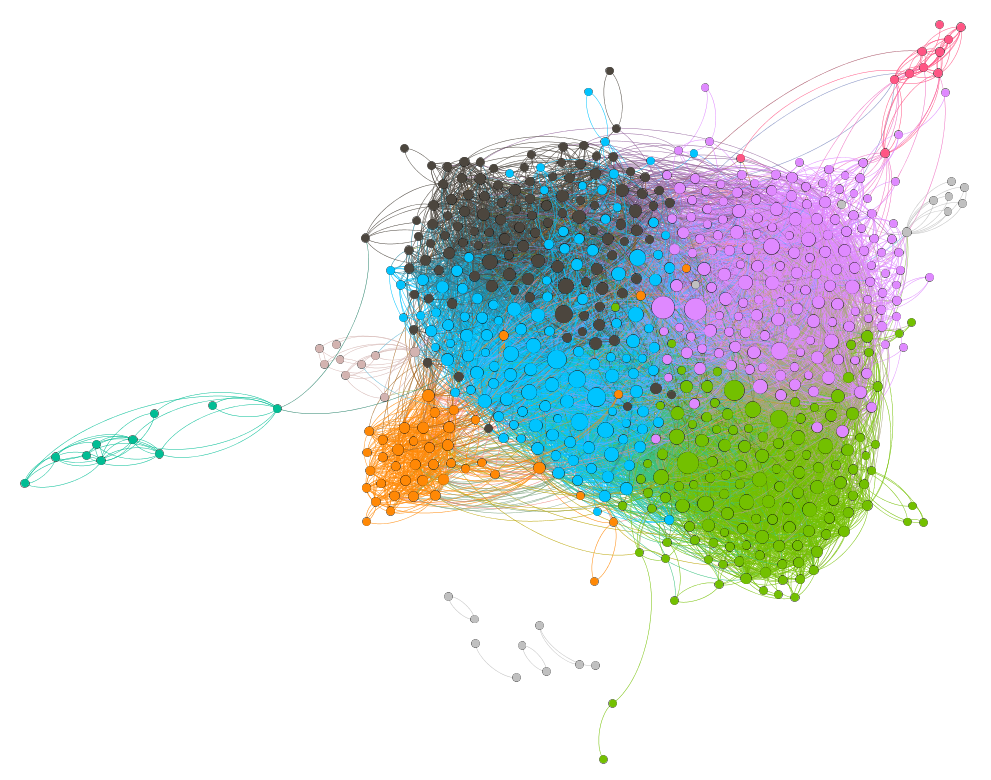
I mapped the twitter following relations of users who had tweeting using the various LSA hashtags (#lsadc2019, #lsa2019, and #lsadc19). Nodes are sized by in-degree and colored by modularity community, of which there are 9 in the main component. Click through for an interactive version.
The Law Prof Twittersphere of 2018
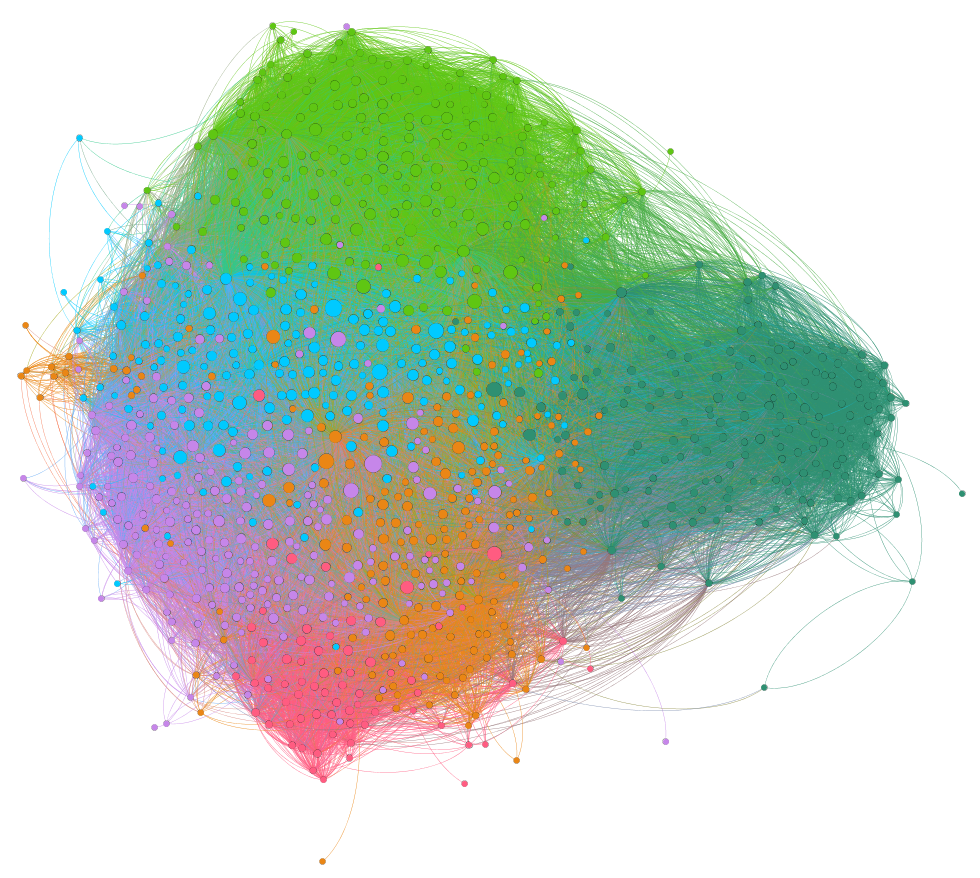
It’s been three years since I last did one of these (link), so when Bridget Crawford updated the Law Prof twitter census (link) I thought I’d re-map the twittersphere to see what’s changed, what’s remained the same and to provide a few minutes of self-indulgent navel-gazing for the law prof commentariat. Everything below is subject… Continue reading The Law Prof Twittersphere of 2018
IPSC 2018 Twittersphere
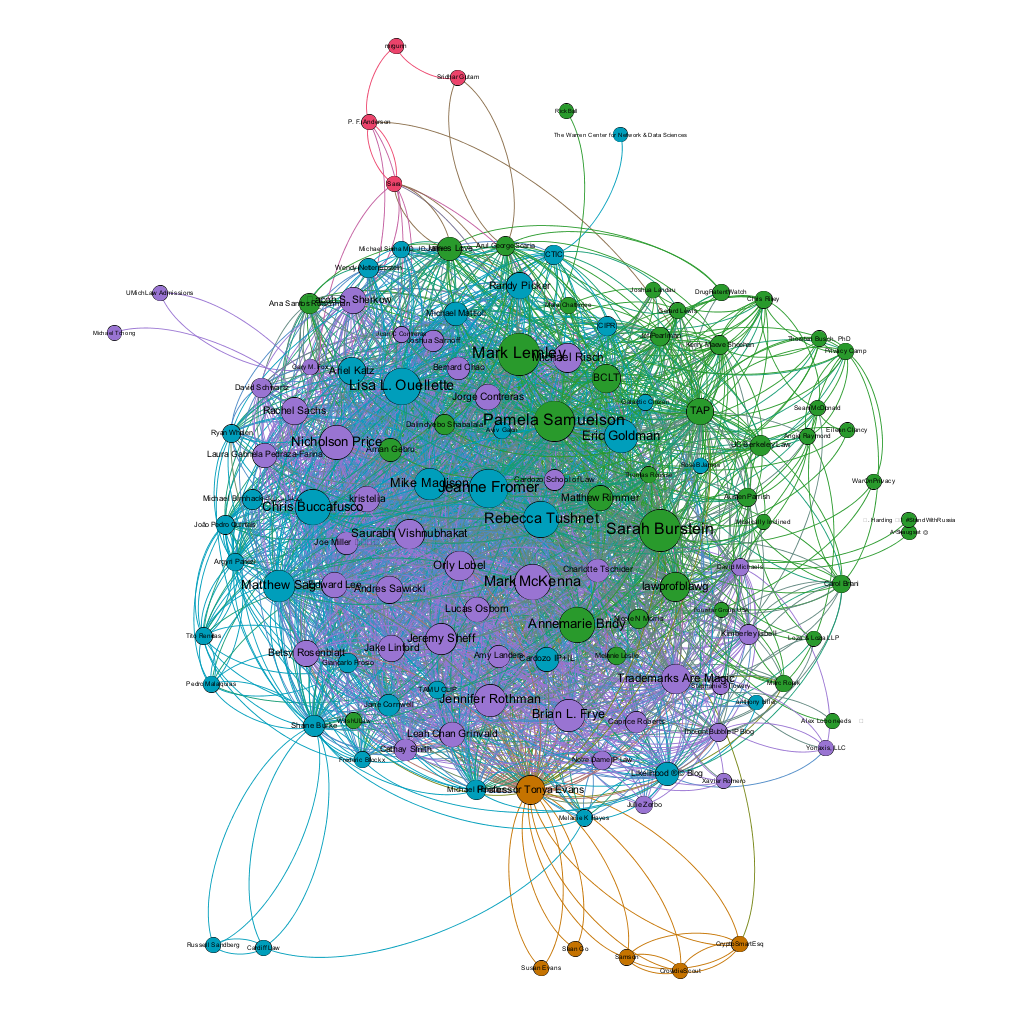
I grabbed following relations for the users who tweeted using the #IPSC2018 hasttag (after August 1st 2018). Map below (click through for interactive version). Takeaway: IP tweeters tend to follow one another a lot. It’s a fairly dense network as far as these these go, with 128 nodes and 2,769 edges.
Collaboration and Impact In Legal Academia – Part 1 ranking homophily
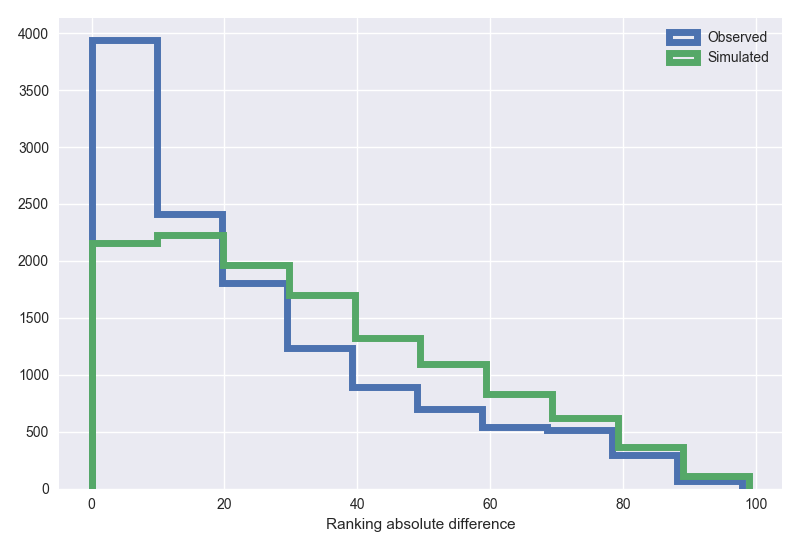
I’ve recently posted a short collection of analyses about the state of collaboration on articles posted to LSN subject matter e-journals: https://ssrn.com/abstract=3206555. I’ll spin out a few parts of the report here over the next few weeks. The first aspect of the collaboration and rankings analysis I’ll to dig into a bit is the role that… Continue reading Collaboration and Impact In Legal Academia – Part 1 ranking homophily
#iconshk network
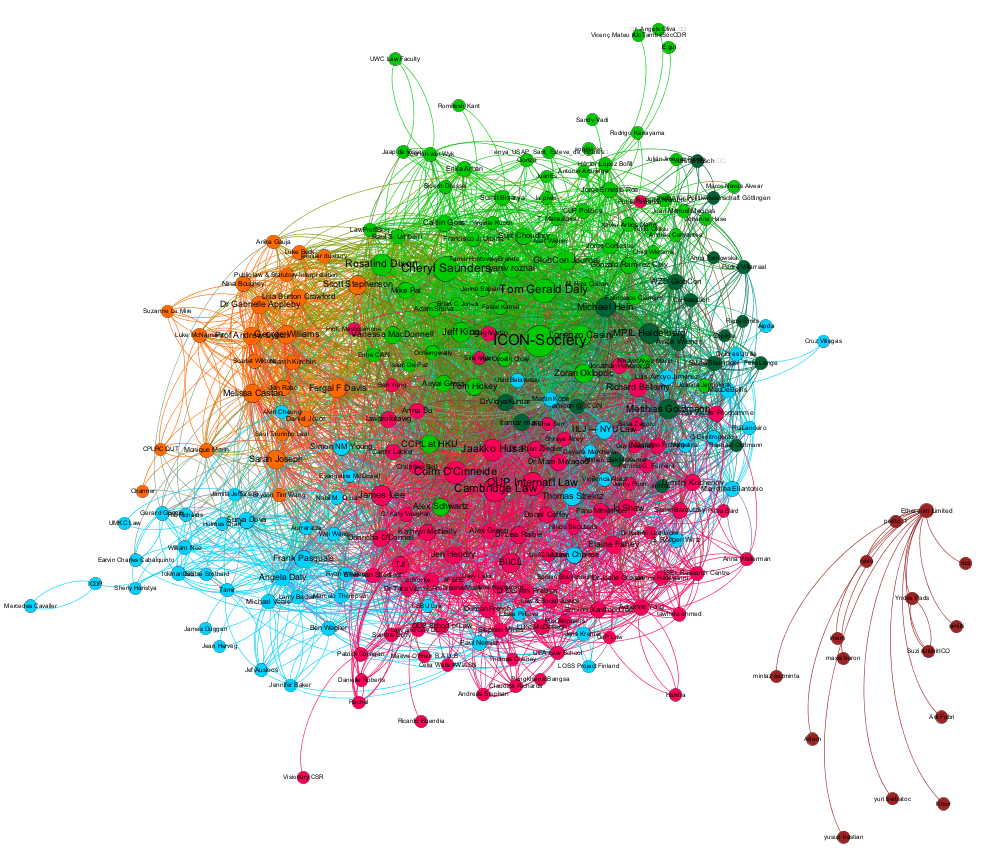
I’ve re-downloaded the #iconshk twitter follower data. Over the first two days of the conference, the number of users who have tweeted using the hashtag has more than doubled – from 106 to 261 users. There are now two connected components (I’ve removed about a half dozen isolates from the visualization, but will include them… Continue reading #iconshk network
SSRN e-Journals and Downloads
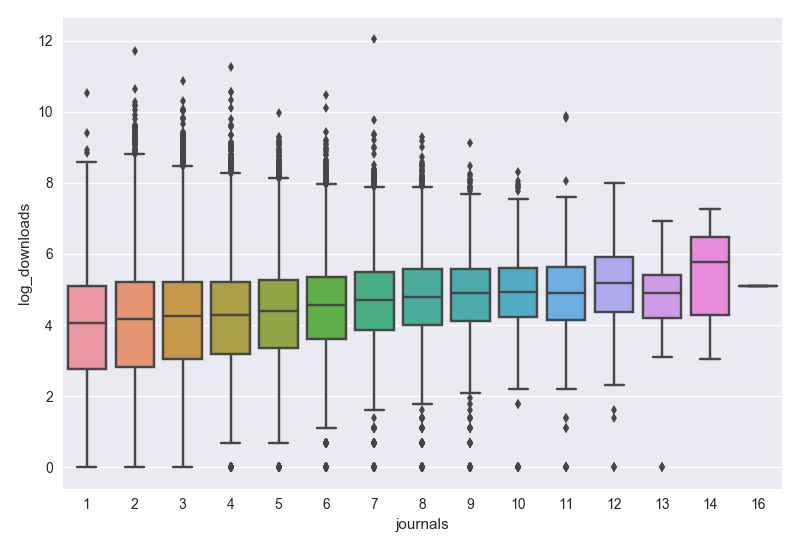
I recently uploaded a couple of forthcoming articles to SSRN (see: https://ssrn.com/author=1544651). Part of the upload process is selecting the relevant “e-journals” you think the article belongs in. As I was doing so, I wondered how much of a difference it really makes. Like, does submitting to more journals lead to more downloads? To satisfy… Continue reading SSRN e-Journals and Downloads
Upcoming Computational Legal Studies Workshop at HKU

We’re excited to be hosting a workshop focusing on Computational Legal Studies here at HKU next June (http://www.lawtech.hk/cfp-computational-legal-studies-2018). Details from the CFP below. We’ve already put together an exciting bunch of researchers. Don’t hesitate to submit something if you’d like to attend. CFP: The Emergence of Computational Legal Studies: The Promises and Challenges of Data-Driven… Continue reading Upcoming Computational Legal Studies Workshop at HKU